
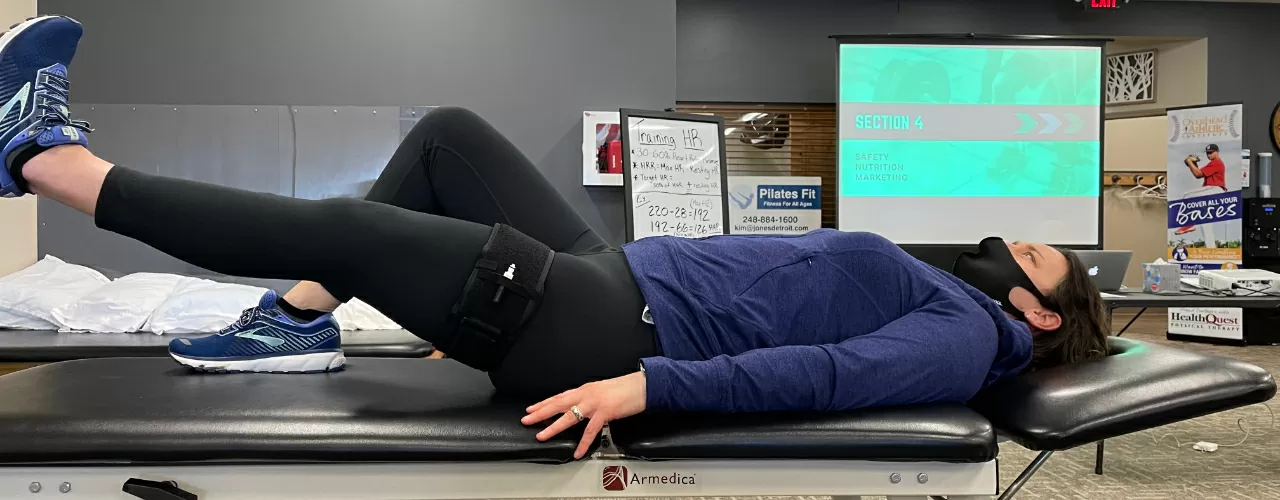



What is Blood Flow Restriction (BFR) and how does it work?
BFR is the brief occlusion of blood flow to and from a limb often by using a blood pressure cuff styled tourniquet which can modify the percentage of restriction. Limiting the blood flow decreases available oxygen to the muscles, among other localized and systemic changes. These changes alter the internal environment of the involved limb, allowing for greater demand, thus leading to increased muscle damage which is pertinent to increasing strength and muscle size.
With BFR, there is the opportunity to create muscle growth and strength increases with less structural damage, which is particularly beneficial to people coming out of a surgery with weightbearing limitations or those who are in acute stages of an injury with low levels of tissue and functional capacities. Further benefits of this type of training include increased anabolic hormone production, acute skeletal muscle swelling, and increased cell signaling for pathways related to muscle protein synthesis to name a few.
Successful outcomes have been identified in research for rehabilitation of knee osteoarthritis, anterior cruciate ligament reconstruction (ACLR), Achilles tendon rupture, sarcopenia, osteochondral fracture, muscular weakness from disuse, inflammatory myositis, and non-reconstructive knee arthroscopy.
Is BFR safe?
According to several sources, BFR is about as safe as high intensity resistance exercise in healthy adults in regards to risk of a Venous Thromboembolism (VTE). This is an encouraging find, as VTE is a common issue post-operatively and in a concern with limited blood flow. When BFR is performed with an appropriate screen to rule out further contraindications and precautions, it is a safe modality which can reduce rehabilitation times and improve results across various injuries.
Applications to ACLR rehab:
BFR is useful in all phases of ACL rehabilitation including pre-surgical and all phases post-operatively. Some research suggests that BFR exercise is an appropriate tool to preserve quadricep muscle density and function that is commonly lost as a result of the surgical process and is a common limitation restricting function shortly after surgery and even months to years later. It is commonly used in the post surgery phase for localized and systemic strengthening and recovery in isolated and compound exercises. Improving limb symmetry strength, and size are crucial in the rehabilitation of ACLR and BFR is an excellent way to focus on each of these goals.